Water damage rarely gives you a warning.
One moment everything seems fine, and the next, you’re dealing with a burst pipe, unexpected flooding, or sudden water intrusion that’s soaking walls, floors, and ceilings. In that moment, most property owners ask the same question.
“Is this really an emergency… or can it wait?”
At TSP Contracting, we’ve seen firsthand how quickly minor water incidents turn into major restoration projects when response is delayed. What starts as a small leak can escalate into structural damage, mold growth, and costly repairs within hours.
That single decision, whether to act immediately or wait, can determine whether your property needs a simple cleanup or a full-scale restoration.
Let’s break down why fast response in emergency water damage restoration in Fairfax, VA, isn’t just helpful, it’s critical.
Why Water Damage Gets Worse Faster Than You Think
Here’s something many homeowners and business owners don’t realize:
Water damage is progressive.
What starts as a small leak or overflow doesn’t stay small. Water spreads quickly through porous materials such as drywall, insulation, wood framing, and flooring. The longer it sits, the deeper it penetrates.
Within the first few hours, water:
- Soaks into walls and subfloors
- Weakens structural materials
- Seeps into insulation
- Begins creating an environment suitable for mold
Within 24–48 hours, the damage can escalate into:
- Mold and mildew growth
- Lingering odors
- Structural deterioration
- Increased repair costs
So the real question becomes:
How much damage are you willing to let happen before acting?
Common Causes of Emergency Water Damage
Many emergency water damage situations happen suddenly and without warning. Some of the most common causes include:
- Burst or frozen pipes
- Appliance failures (washing machines, dishwashers, water heaters)
- Roof leaks after heavy rain or storms
- Sewer backups
- HVAC condensation line failures
- Overflowing sinks, tubs, or toilets
- Foundation cracks allowing water intrusion
Even what seems like minor water exposure can quickly spread behind walls and under flooring, creating hidden damage that worsens over time.
The Hidden Costs of Delayed Water Damage Restoration
Many property owners delay calling professionals because they hope the issue will “dry out on its own.”
On the surface, that sounds reasonable.
But here’s what often happens behind the scenes:
- Moisture remains trapped inside the walls
- Flooring warps, buckles, or separates
- Electrical systems become compromised
- Mold begins spreading invisibly
By the time the damage becomes visible, the restoration process becomes longer, more invasive, and significantly more expensive.
Fast response doesn’t just fix the problem; it prevents secondary damage that insurance policies may not fully cover.
What Emergency Water Damage Restoration Really Involves
Emergency water damage restoration is more than just removing standing water.
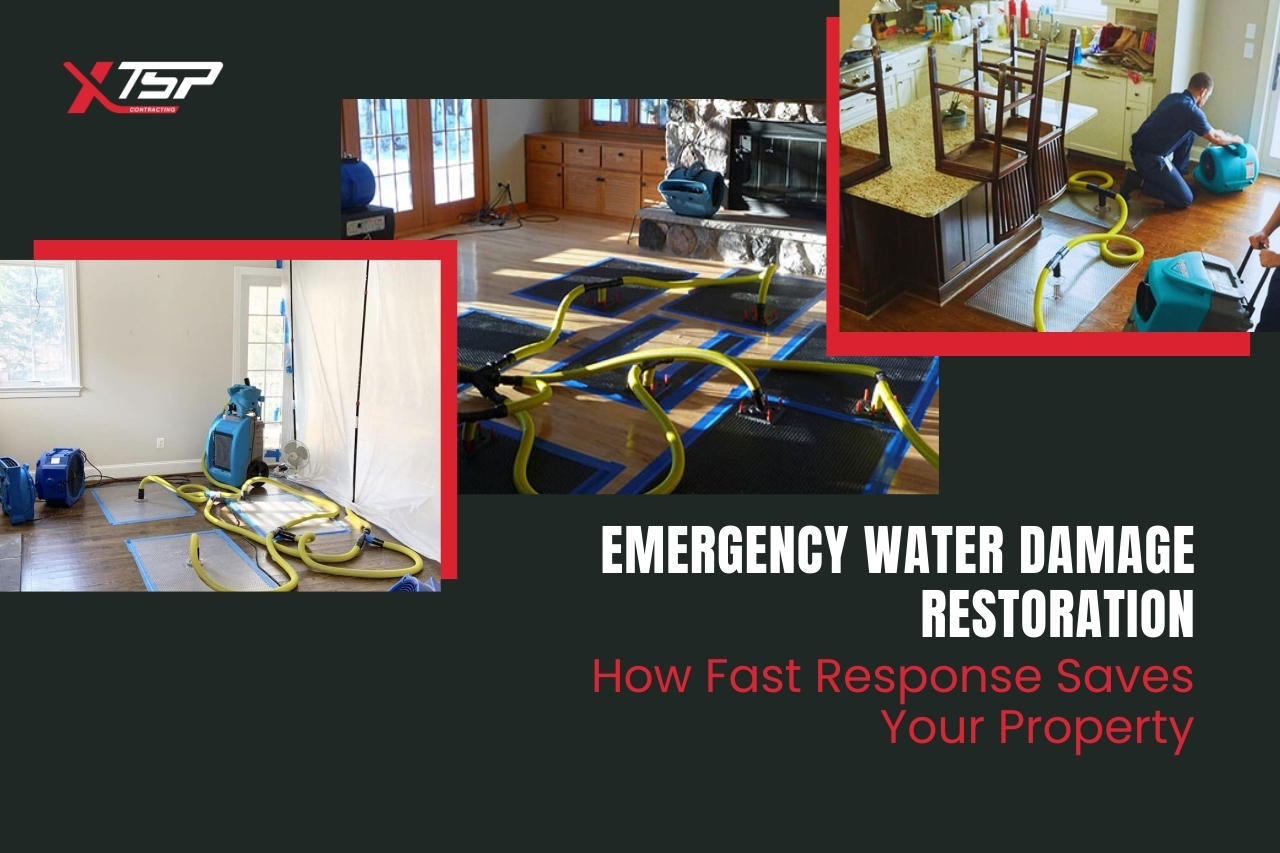
A professional fast-response team focuses on:
- Immediate water extraction to stop further spread
- Advanced drying and dehumidification to remove hidden moisture
- Moisture detection using specialized equipment
- Damage assessment to identify affected materials
- Preventative steps to reduce mold and structural issues
The goal isn’t just to clean up, it’s to stabilize your property before irreversible damage sets in.
Why Speed Protects Your Structure (Not Just Your Belongings)
Water doesn’t just damage what you can see.
It weakens:
- Wooden framing
- Subflooring
- Support beams
- Drywall and insulation
Over time, this can lead to sagging floors, compromised walls, and even safety hazards.
A fast emergency response limits how deeply water penetrates these materials, often making the difference between repairing and replacing major components.
👉 The faster the response, the more of your property can be saved.
Mold Prevention Starts With Fast Action
One of the biggest risks after flooding or water intrusion is mold growth.
Mold can begin forming in as little as 24 hours under the right conditions. Once it spreads, remediation becomes more complex, time-consuming, and costly, and it can impact indoor air quality.
Fast water damage restoration removes moisture before mold has the chance to take hold, helping protect:
- Your health
- Your property value
- Your long-term repair costs
Emergency Response Matters for Commercial Properties Too
For businesses, water damage doesn’t just affect the building; it affects operations.
Delays can lead to:
- Extended downtime
- Lost revenue
- Safety concerns
- Compliance issues
A fast restoration response helps businesses reopen sooner and minimizes disruption. In many cases, early action can mean the difference between a short interruption and weeks of operational impact.
When Should You Call for Emergency Water Damage Restoration?
If you’re wondering whether your situation qualifies as an emergency, ask yourself:
- Is water actively spreading or pooling?
- Has water reached walls, floors, or ceilings?
- Is there a risk of electrical exposure?
- Has the source of water been unresolved for hours?
- Is the affected area larger than a small, contained spill?
If the answer is yes to any of these, a professional response is essential.
Waiting rarely improves the situation. Quick action almost always limits the damage.
Frequently Asked Questions (FAQs)
1. How quickly should I respond to water damage?
Immediately. The first 24–48 hours are critical to prevent structural damage and mold growth.
2. Can water damage dry on its own?
Surface moisture may dry, but hidden moisture inside walls, flooring, and insulation often remains and can lead to long-term issues.
3. Will my insurance cover emergency water damage restoration?
Coverage depends on the source of water. Sudden incidents like burst pipes are often covered, while gradual leaks may not be. Documentation and quick mitigation are important.
4. How long does emergency water damage restoration take?
Mitigation typically takes several days depending on the severity, followed by repair or reconstruction if needed.
Fast Response Today Means Fewer Problems Tomorrow
Water damage doesn’t wait, and neither should restoration.
Emergency water damage restoration is about protecting what matters most: your property, your safety, and your peace of mind.
At TSP Contracting, we understand how quickly water damage escalates, and how critical fast, professional action can be in Fairfax, VA.
If you’re dealing with flooding, water intrusion, or a burst pipe, acting quickly isn’t overreacting.
It’s the smartest move you can make.